
Zefir VS Marshmallow
When it comes to understanding the difference between a marshmallow and zefir, there is currently a cacophony of definitions. Since most of the attention zefir has attracted comes from the visual appeal of piped zefir flowers, it has been called and marketed as marshmallow flowers (with zefir mentioned in brackets, apparently for the sake of fairness), Russian marshmallow, and even the rather absurd zefir marshmallow, to name just a few of the most popular titles.
During our TikTok lives and in classes, we like to refer to zefir as a marshmallow cousin, or a middle ground between a marshmallow and a meringue. There are four key aspects that set zefir and marshmallow apart: HISTORICAL ORIGIN, INGREDIENTS AND PRODUCTION, TASTE AND TEXTURE, and PIPABILITY AND USAGE.
Historical Origin
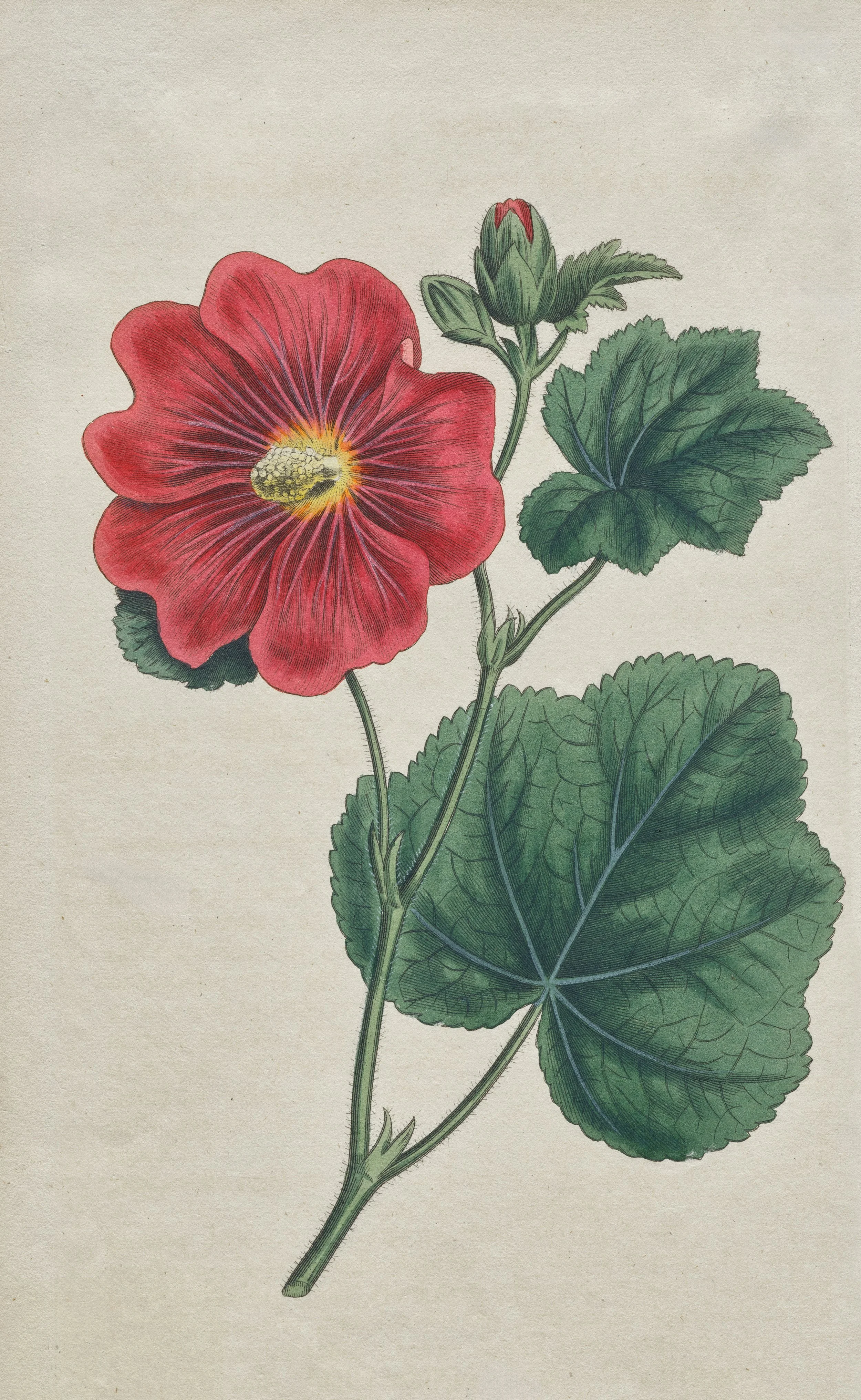
Marshmallow plant. The Botanical Magazine or Flower Garden Displayed: Plate 892, Althaea Flexuosa.
Marshmallows are among the earliest confections known to humankind. The mallow plant was indigenous to Europe, Asia, and North Africa. The first marshmallows were made by boiling pieces of marsh mallow root pulp with sugar until the mixture thickened. Once thickened, it was strained and cooled. As far back as 2000 BC, Egyptians combined marsh mallow root with honey. This confection was reserved for the gods and royalty and was believed to be healthful.
Modern marshmallow confections were first made in France around 1850. This early method of production was expensive and slow, as it required each marshmallow to be individually cast and molded. French candy makers used mallow root sap as a binding agent for egg whites, corn syrup, and water. At that time, marshmallows were still not mass-produced; they were made by confectioners in small shops or candy companies. True mass production became possible with the invention of the starch mogul system in the late 19th century.
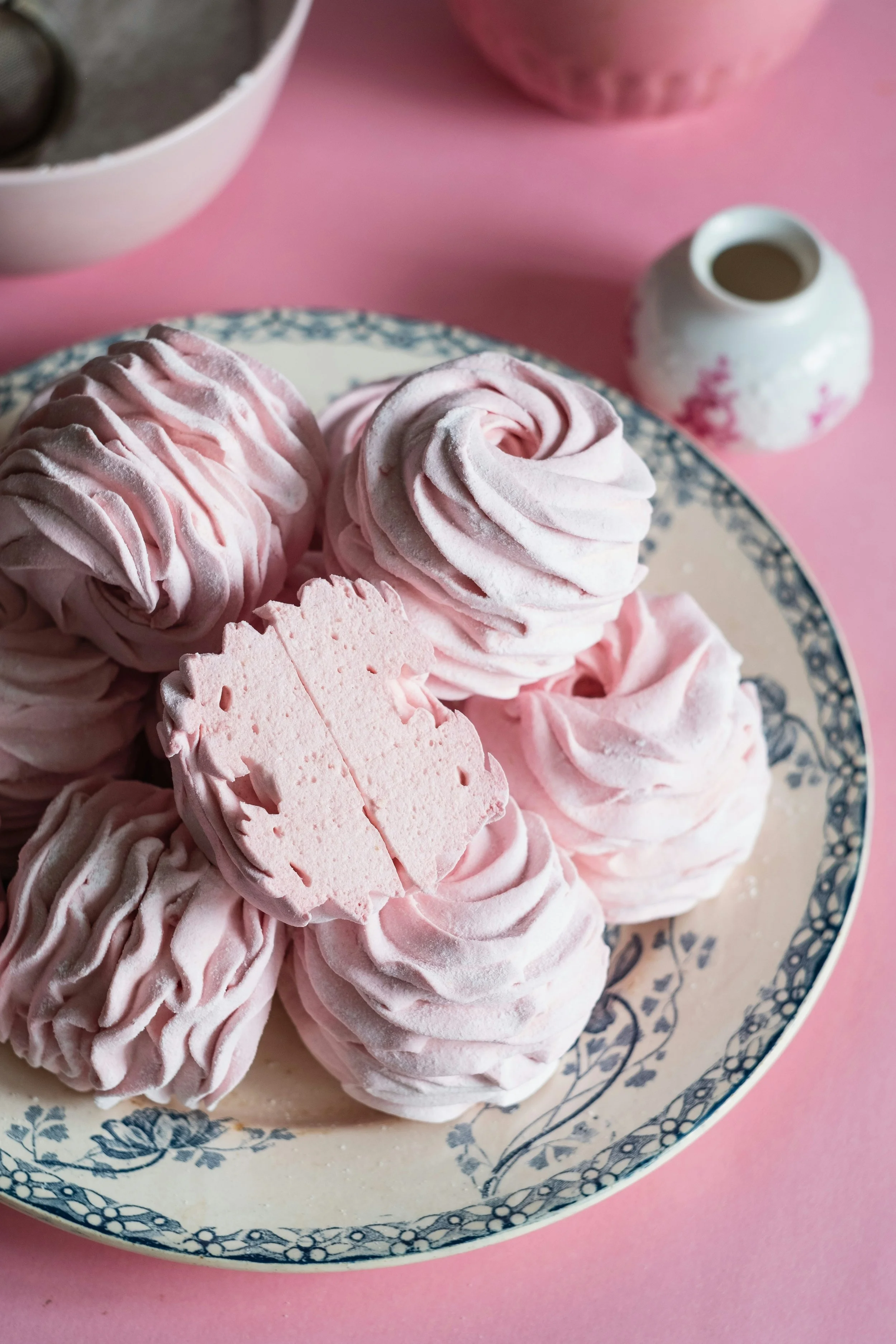
Classic berries flavored zefir (zephyr) shape
Zefir, on the other hand, naturally evolved from pastila, a traditional Russian dessert made from cooked apples, honey, and later egg whites. In the 19th century, the mixture was whipped with sugar for a lighter texture and named Zephyr (Zefir) after the Greek god of the West Wind. With the beginning of industrialization, agar-agar was added, shaping zefir into the form and texture we recognize today.
As you can see, both confections originate from different places and carry their own distinct histories.
Ingredients and Production
Zefir (Zephyr), since its origin, has not changed much in terms of production and contains four main ingredients: applesauce, sugar, egg whites, and agar-agar. With endless possibilities for flavoring, the further evolution of this confection involved the addition of various fruits, berries, coffee, vanilla, and more - resulting in a wide assortment of zefir flavors, including chocolate-covered varieties.
The production of zefir is similar to that of Italian meringue. The egg whites - sometimes along with applesauce and sugar - are whipped while, simultaneously, a syrup containing applesauce, agar-agar, water or juice, and sugar is being cooked. Once the syrup reaches the temperature necessary to activate the agar-agar and the egg whites reach stiff peaks, the two mixtures are combined. The result is a warm, gooey zefir mass, which is either machine-piped into shell shapes during manufacturing or manually piped into various forms, including intricate flowers. Once fully set, zefir must be dusted with sugar to prevent drying and stickiness.
Marshmallow, on the other hand, has completely dropped its namesake from the ingredient list and is predominantly manufactured using two or three main components: sugar and/or corn syrup, and gelatin. Home recipes often suggest adding egg whites and extra flavorings to marshmallows or marshmallow creams.
The production of marshmallow is similar to that of zefir. A syrup made from water and corn syrup and/or sugar is boiled and then slowly streamed into the gelatin mixture while whipping. Once whipped, the mixture is spread onto a surface covered with cornstarch and powdered sugar. After setting, it also needs to be dusted with a mixture of cornstarch and powdered sugar to prevent stickiness.
Despite the similarities in production and a few shared ingredients, these two confections are more like relatives than siblings.
Taste and Texture
Zefir has an airy, delicate texture, soft and effortless on the bite, and can carry a bold, expressive flavor depending on the flavoring used. Beyond the classic apple profile, at Bouqedibles we always include vanilla paste as a base note, and we love incorporating freeze-dried and fresh tart berries to balance the sweetness. We also work with other natural flavorings such as coffee or rose water.
Marshmallows, by contrast, are soft yet noticeably chewy, with flavor profiles that are more limited and typically achieved through essences and juices.

Zefir flowers filled with raspberry jelly. Bouqedibles. 2025
We believe that taste and texture, along with the ingredients themselves, are what truly set these two confections apart. In this contrast, marshmallow, once rooted in a healthful origin, has gradually lost that identity, while zefir stands elevated by its simpler, cleaner, and more wholesome list of ingredients.
Pipability and usage:
The rise of popularity of marshmallow in the US was once due to some clever marketing inventions: a s’more, and later becoming a staple of every potluck gathering, along with a plethora of recipes produced by Jell-O and Knox Gelatine in the early 20th and 30th. It’s also widely popular as a frosting and filling, stapling its presence in desserts like Wagon Wheels and other cookies and pies.
As for the pipability, marshmallow is rather liquid before it sets and could be piped into cute little animal shapes, melting into each other.
Zefir, since becoming popular in Eastern Europe in the late 19th century, remains one of the staple confections there, considered lighter in calories and healthier than many, and offering a wide range of flavors for any taste.
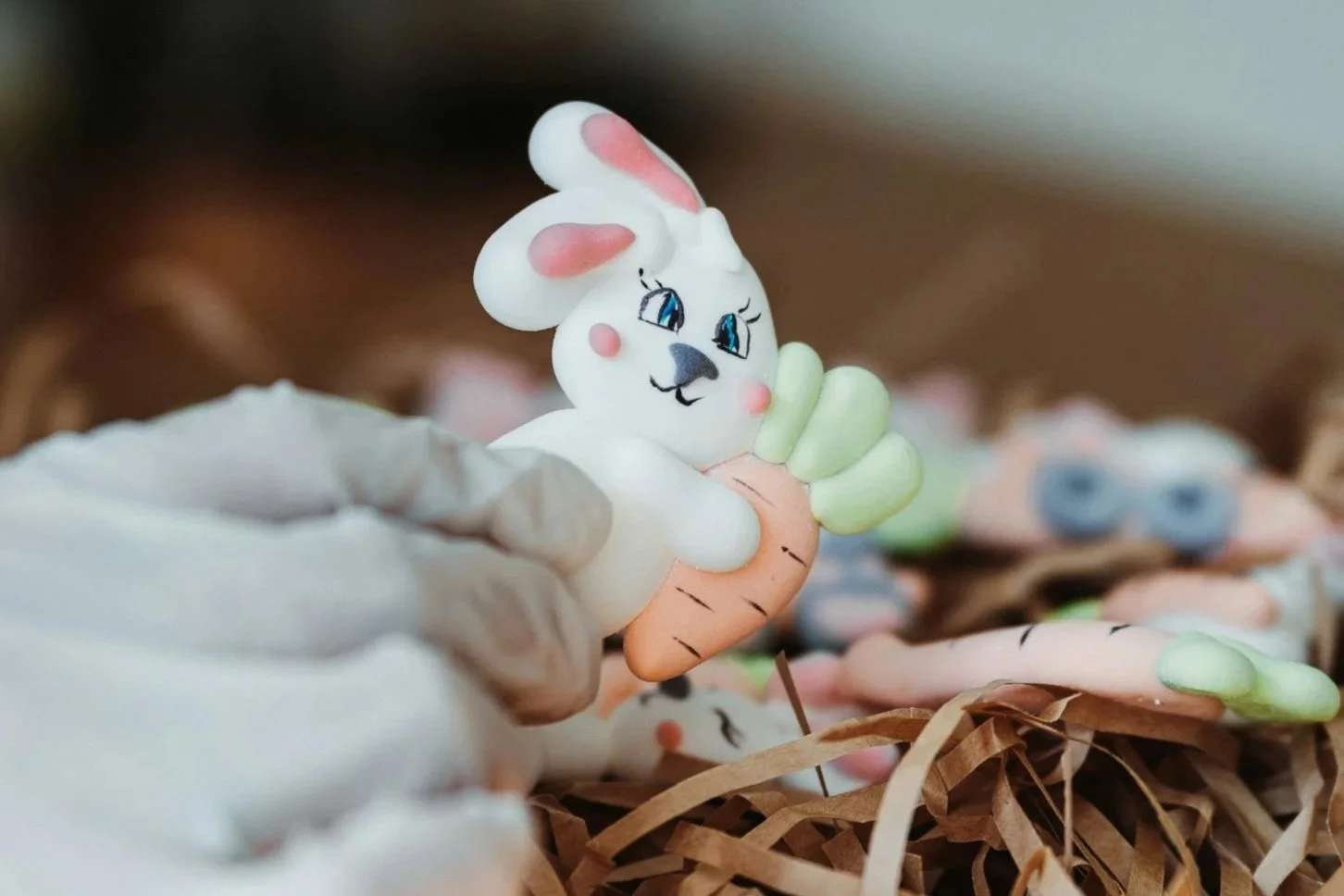
Piped Marshmallow Bunny
Within the recent 10 years, with the booming baking and particularly home-baking industry, zefir became an epitome of high decor, encouraging hundreds and maybe thousands of people to learn how to pipe the mixture into breathtaking realistic-looking flowers and put them together into floral arrangements and more.
Additionally, with the lower amount of the gelling agent - agar agar - the zefir mixture also transforms into a pipeable and delicious filling for cakes and cookies, or an exceptional frosting for tarts.
Afterword
While there is room for both confections, as we’re sure each has its own fan club, it is safe to state that zefir is a healthier marshmallow cousin and a different incarnation of a meringue as well. Both are versatile, depending on each chef’s goals. But don’t be fooled. If you see a beautiful flower arrangement somewhere on trendy social media, make no mistake - that would be zefir.